

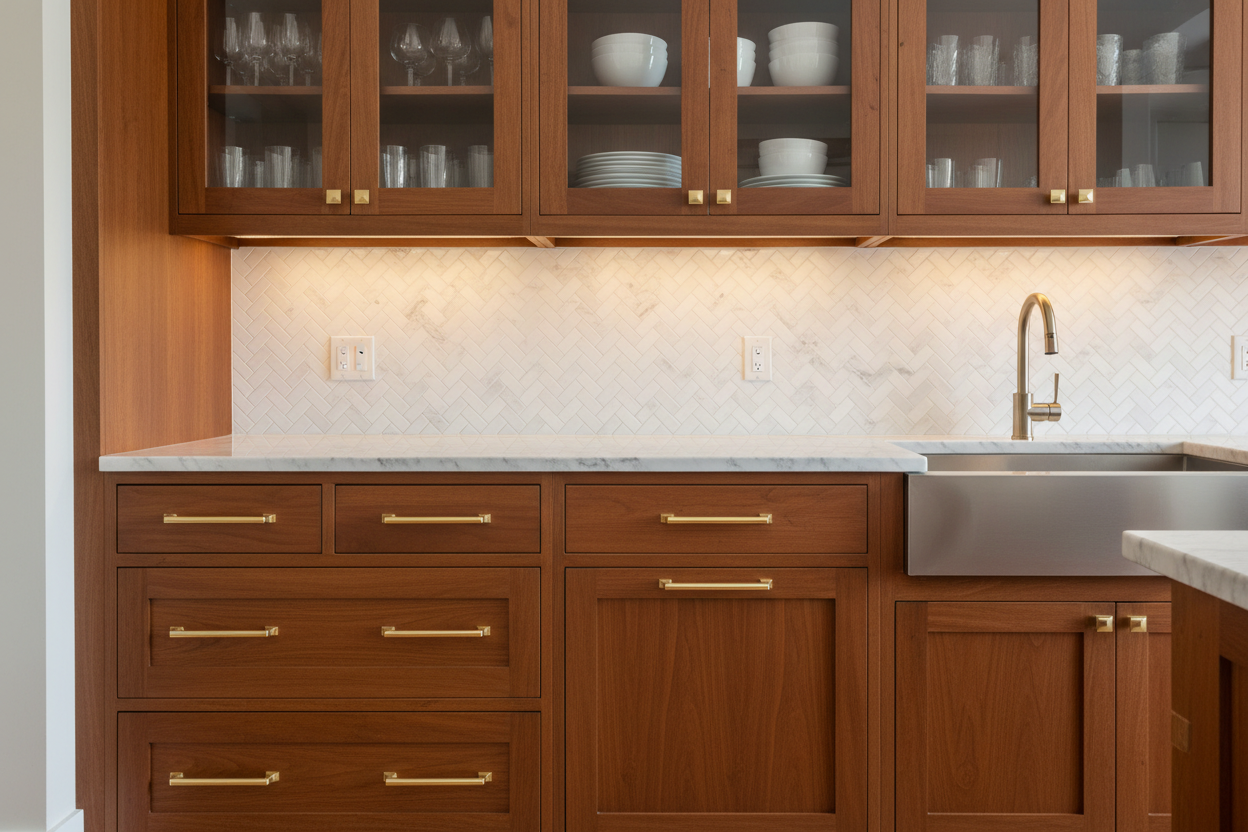
Planning a well-designed custom kitchen cabinet layout is the foundation of any successful kitchen renovation. The right layout improves workflow, maximizes storage, and creates a beautiful space to enjoy cooking and entertaining.
This guide will walk you through the essential steps for designing a custom cabinet layout tailored to your unique kitchen space and lifestyle.
Step 1: Assess Your Kitchen Space and Needs
Start by measuring your kitchen accurately:
- Overall dimensions (length, width, and height)
- Locations of doors, windows, and appliances
- Existing plumbing and electrical points
Consider your daily kitchen habits:
- How many people cook regularly?
- Do you entertain frequently?
- What are your storage requirements (pots, pantry items, utensils)?

Step 2: Choose the Best Layout Style
The classic kitchen layouts include:
- U-Shaped: Maximizes counter and cabinet space on three sides.
- L-Shaped: Open layout ideal for small to medium kitchens.
- Galley: Efficient corridor design with cabinets on both sides.
- Island: Freestanding central cabinet for prep and storage.
Step 3: Design Cabinet Types and Placement
Identify cabinet types based on function:
- Base Cabinets: Support countertops and house heavy items.
- Wall Cabinets: Store dishes, glassware, and pantry items.
- Tall Cabinets: Include pantries and ovens.
- Specialty Cabinets: Corner pull-outs, lazy susans, appliance garages.
Custom kitchen cabinets can be designed to fit unique spaces and accommodate your storage needs.
Step 4: Incorporate Smart Storage Solutions
Maximize efficiency with built-in organizers and accessories:
- Pull-out spice racks
- Deep drawers with adjustable dividers
- Under-sink storage optimized for plumbing
- Built-in trash and recycling bins
Step 5: Plan for Appliances and Fixtures
Allocate space for:
- Refrigerator
- Oven and microwave
- Dishwasher
- Sink and faucet
- Range hood
Ensure cabinets around appliances provide enough clearance and ventilation.
Step 6: Finalize Materials and Finishes
Select cabinet materials, door styles, finishes, and hardware that match your kitchen theme and lifestyle.
Step 7: Consult with Professionals
Work with cabinet designers and contractors to verify measurements, structural requirements, and installation timelines.
Conclusion
A well-planned custom kitchen cabinet layout can transform your cooking space into a functional, stylish heart of your home. By following these steps and leveraging expert support from GoldenHome, you can achieve a kitchen renovation that suits your lifestyle and stands the test of time.


