

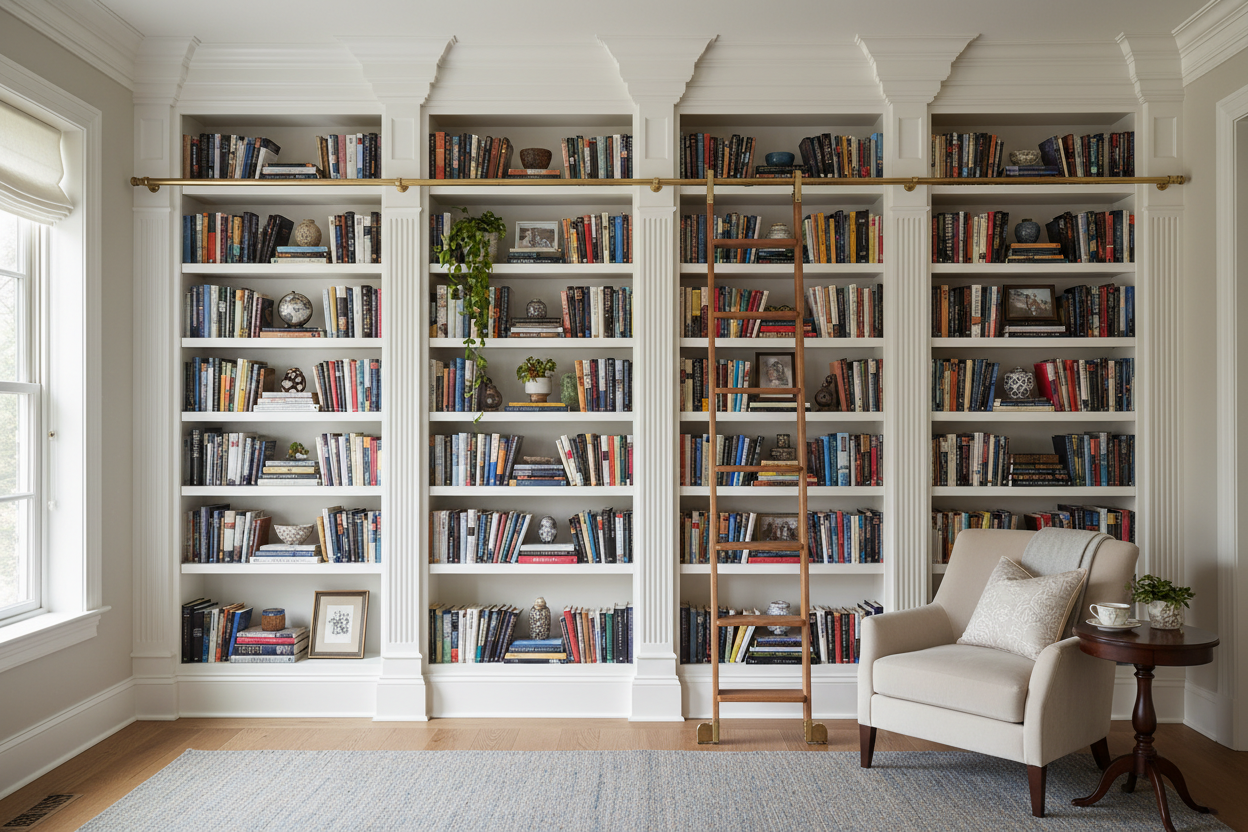
Why Material Choice Matters in a Built-in Bookcase
A built-in bookcase is a long-term architectural feature rather than a temporary piece of furniture. Because it is fixed to the structure of the home, choosing the right materials and finishes directly affects durability, appearance, and long-term satisfaction.
Understanding the strengths and limitations of different materials helps homeowners and professionals make smarter decisions.

Common Materials Used in Built-in Bookcases
1. Solid Wood
Solid wood is often associated with high-end, traditional built-in bookcases. It offers natural beauty, strength, and long-lasting performance.
- Pros: Natural grain, strong load-bearing capacity, timeless appearance
- Cons: Higher cost, sensitive to humidity changes, heavier structure
Solid wood is ideal for libraries, living rooms, and statement bookcases where craftsmanship is a priority.
2. Plywood
Plywood is a popular choice for custom built-in bookcases because it offers excellent stability while remaining more affordable than solid wood.
- Pros: Strong, resistant to warping, good value
- Cons: Quality varies by grade, edges require finishing
High-grade plywood is commonly used for shelves and structural panels in modern built-in bookcases.
3. MDF (Medium Density Fiberboard)
MDF is widely used for painted built-in bookcases due to its smooth surface and consistent texture.
- Pros: Smooth finish, cost-effective, ideal for paint
- Cons: Lower load capacity than wood, sensitive to moisture
MDF works best for decorative shelving and cabinetry where heavy book loads are limited.
4. Metal and Mixed Materials
Modern built-in bookcases increasingly combine metal frames with wood or MDF shelving. This approach creates a contemporary, lightweight appearance.
- Pros: Modern aesthetic, strong structural support
- Cons: Higher fabrication complexity, industrial appearance may not suit all interiors
Mixed-material designs are popular in lofts, modern homes, and open-plan interiors.
Choosing the Right Finish for a Built-in Bookcase
Painted Finishes
Painted built-in bookcases are versatile and easy to match with interior walls. Light colors create a seamless, integrated look, while darker tones make the bookcase a focal feature.
Wood Veneer and Natural Finishes
Veneer finishes provide the appearance of solid wood while reducing material cost. Natural finishes highlight texture and warmth, making them ideal for living rooms and studies.
Matte vs. Gloss
Matte finishes offer a modern, understated appearance and hide fingerprints well. Gloss finishes reflect light and create a more dramatic visual impact but require more maintenance.
Open Shelving vs. Closed Storage
A well-designed built-in bookcase balances display and concealment. Open shelves showcase books and décor, while closed cabinets hide clutter.
| Open Shelving | Closed Cabinets |
|---|---|
| Light and decorative | Clean and concealed |
| Easy access | Reduces visual clutter |
| Requires organization | Lower maintenance |
Most modern built-in bookcases combine both approaches for flexibility.
Custom Built-in Bookcases vs. Modular Systems
Modular shelving systems offer quick installation, but they rarely achieve the same visual integration as custom solutions.
Custom built-in bookcases are designed to fit wall dimensions exactly, align with architectural details, and integrate seamlessly with the room.
Durability and Load Considerations
Books are heavy, and shelf design must account for long-term load. Shelf thickness, material choice, and span length all affect performance.
Professional built-in bookcase designs include reinforced shelves and proper wall anchoring to prevent sagging over time.

Whole-Home Storage Integration
Increasingly, built-in bookcases are designed as part of a whole-home storage plan. Consistent materials and finishes across rooms create a cohesive interior.
This approach is commonly adopted by cabinetry manufacturers such as goldenhome, where bookcases are coordinated with kitchens, wardrobes, and other built-in systems.
Conclusion
Choosing the right built-in bookcase requires balancing material strength, finish durability, and design intent. By understanding material options and functional requirements, homeowners can invest in bookcases that perform beautifully for years.
A well-chosen built-in bookcase is not just storage — it is a lasting design feature that enhances both daily living and property value.


