

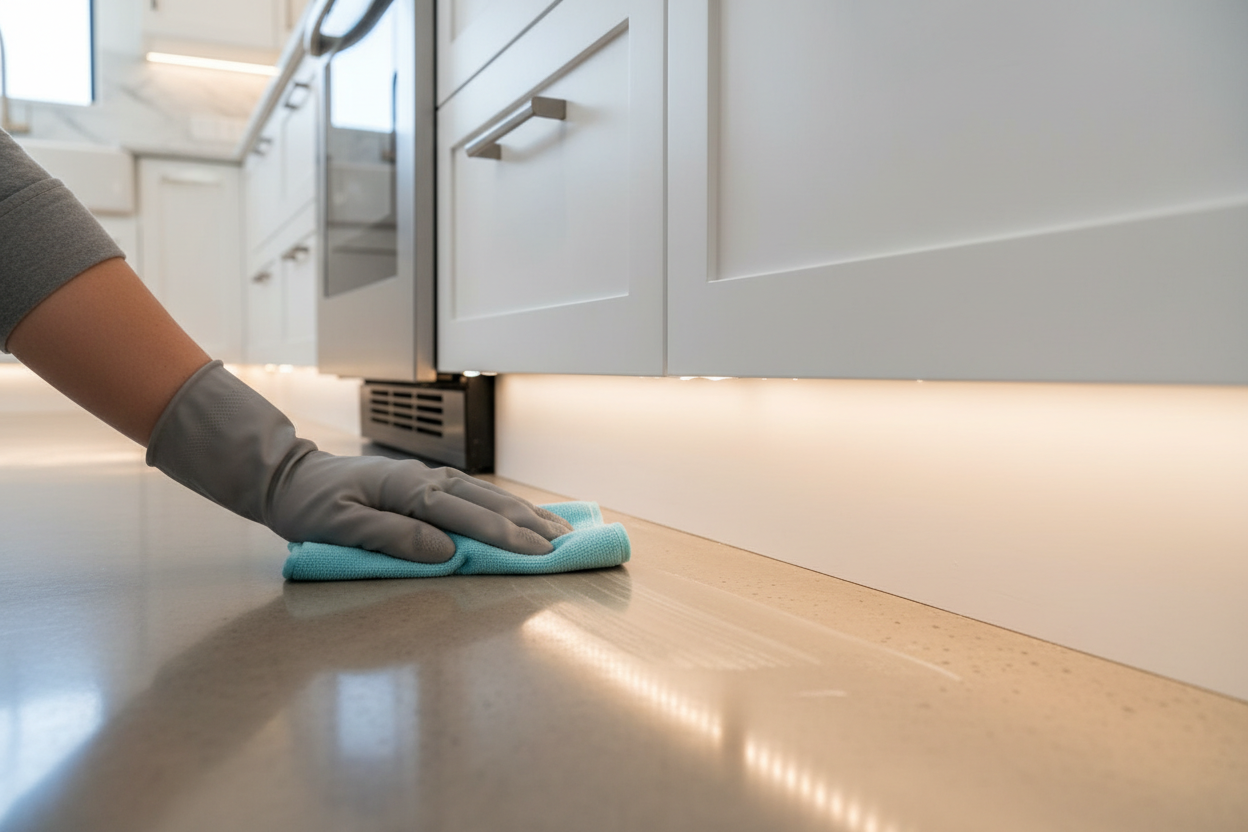
Introduction: Why Cabinet Baseboard Maintenance Matters
Cabinet baseboards, also known as toe kicks, are one of the most frequently exposed parts of kitchen cabinetry. They are constantly subjected to dust, moisture, spills, and foot traffic, making regular cleaning and maintenance essential.
For cabinet distributors, kitchen dealers, contractors, real estate developers, and homeowners, maintaining cabinet baseboards not only preserves their appearance but also extends the lifespan of the entire cabinetry system.

What Affects Cabinet Baseboard Durability?
Several factors influence how well cabinet baseboards perform over time:
- Material type (wood, PVC, laminate, metal)
- Kitchen humidity levels
- Frequency of cleaning
- Exposure to spills and impacts
Understanding these factors helps in choosing the right maintenance routine.
How to Clean Cabinet Baseboards Step by Step
Step 1: Remove Dust and Debris
Use a soft cloth, vacuum, or brush to remove loose dirt and dust from the baseboard surface.
Step 2: Wipe with Mild Cleaner
Use a damp cloth with mild soap or a gentle cleaning solution to wipe down the surface.
Step 3: Dry Thoroughly
Ensure the baseboard is completely dry to prevent moisture damage.
Step 4: Spot Clean Stains
For stubborn stains, use a non-abrasive cleaner suitable for the material.
Cleaning Methods by Material
| Material | Cleaning Method | Notes |
|---|---|---|
| Wood | Dry or slightly damp cloth | Avoid excess water |
| PVC | Mild cleaner and water | Highly moisture-resistant |
| Laminate | Soft cloth and gentle cleaner | Avoid abrasive materials |
| Metal | Specialized cleaner | Prevent scratches |
Maintenance Tips for Long-Lasting Cabinet Baseboards
Regular Cleaning
Clean baseboards weekly to prevent buildup of dirt and grease.
Avoid Excess Moisture
Excess water can damage certain materials, especially wood.
Use Protective Finishes
Sealants and coatings can improve durability and resistance.
Inspect for Damage
Check for cracks, warping, or loose panels and address issues promptly.
How Cabinet Manufacturers Improve Durability
Modern cabinet manufacturers design baseboards using durable materials and protective finishes to withstand daily wear and tear.
For example, Goldenhome, a global custom cabinetry manufacturer with over 27 years of experience, incorporates advanced materials and finishes to enhance the durability and maintenance of cabinet baseboards.
Common Cleaning Mistakes to Avoid
- Using harsh chemicals
- Applying too much water
- Using abrasive cleaning tools
- Ignoring regular maintenance

Signs Your Cabinet Baseboard Needs Repair or Replacement
- Visible cracks or chips
- Warping or swelling
- Loose or misaligned panels
- Persistent stains or discoloration
Maintenance Trends in 2026
1. Low-Maintenance Materials
PVC and laminate are becoming popular due to easy cleaning.
2. Protective Coatings
Advanced coatings improve resistance to moisture and stains.
3. Modular Baseboards
Removable designs simplify cleaning and maintenance.
FAQ: Cabinet Baseboard Maintenance
How often should I clean cabinet baseboards?
Weekly cleaning is recommended for best results.
Can I use regular household cleaners?
Yes, but avoid harsh or abrasive chemicals.
How do I prevent damage to baseboards?
Use proper cleaning methods and inspect regularly for issues.
Conclusion
Proper cleaning and maintenance of cabinet baseboards are essential for preserving both functionality and appearance. By following simple care routines, you can extend the lifespan of your cabinetry and maintain a clean, polished kitchen.
With the support of experienced cabinet manufacturers, cabinet baseboards can be designed for durability and easy maintenance, ensuring long-term value for any project.


